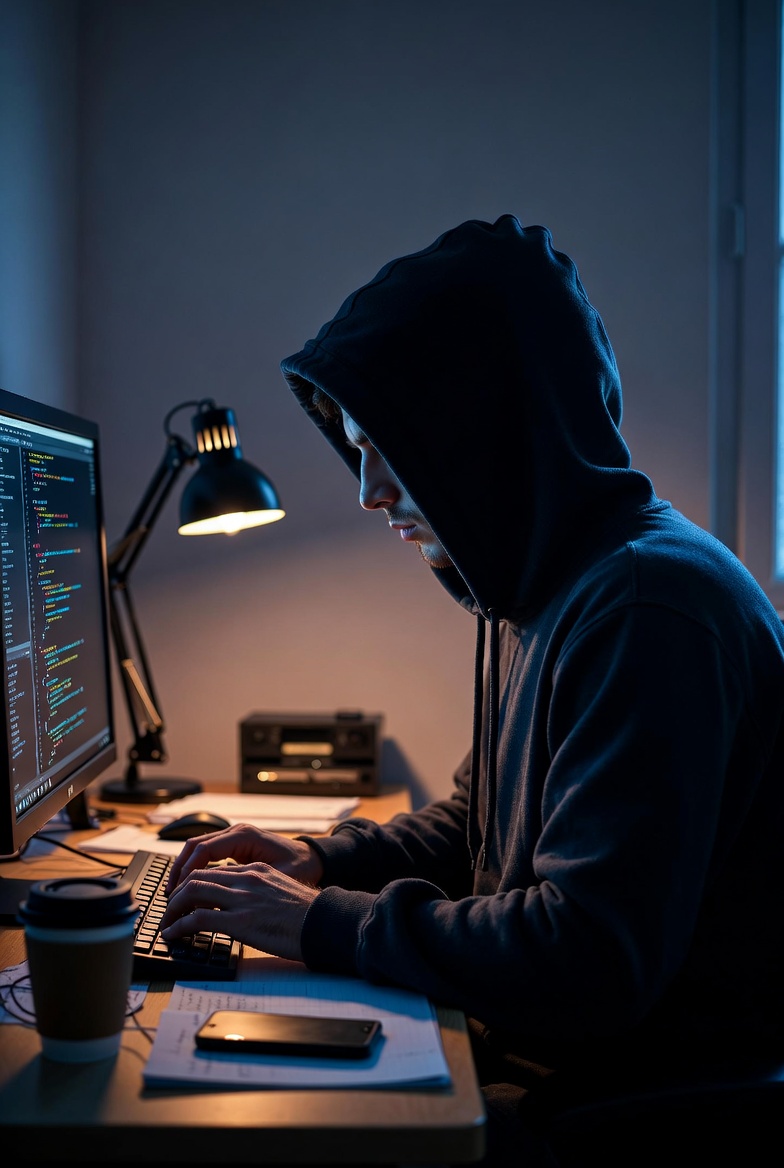
At 2:30 AM, the office lights in the cybersecurity firm were still on.
Tunde stared at his laptop screen, watching lines of code scroll past rapidly.
To most people, it looked like chaos.
To Tunde, it was a puzzle.
Earlier that night, the company’s monitoring system detected suspicious activity on a client’s website. Someone was trying to break into the system by repeatedly sending different password combinations.
This type of attack is called a brute force attack, where attackers attempt thousands of password guesses until one works.
Tunde had once been fascinated by hacking when he was younger. He loved understanding how systems worked and how they could be broken.
But instead of becoming a criminal hacker, he chose a different path.
He became an ethical hacker.
Ethical hackers use the same techniques as attackers, but for a good purpose — to find security weaknesses before criminals do.
Tunde began analyzing the traffic hitting the server.
The attacker was using automated scripts to send login requests thousands of times per minute. If the system had weak passwords, the attacker might eventually gain access.
But Tunde knew exactly what to look for.
He checked the login system and immediately noticed two problems:
First, the system allowed unlimited login attempts.
Second, it didn’t use multi-factor authentication, which adds an extra layer of security beyond just a password.
Within minutes, Tunde implemented a fix.
He added rate limiting, which blocks repeated login attempts after a certain number of failures.
He also recommended enabling two-factor authentication (2FA) so that even if a password is stolen, the attacker still cannot log in without a second verification code.
As soon as the new protections went live, the attack stopped.
The automated scripts could no longer flood the login system.
The client’s data remained safe.
Later that morning, the company thanked Tunde for stopping what could have been a serious security breach.
Moments like this reminded him why he chose ethical hacking.
Because in cybersecurity, the best defenders are often the ones who understand exactly how attackers think.
And sometimes, the difference between a hacker and a hero is simply which side they choose.